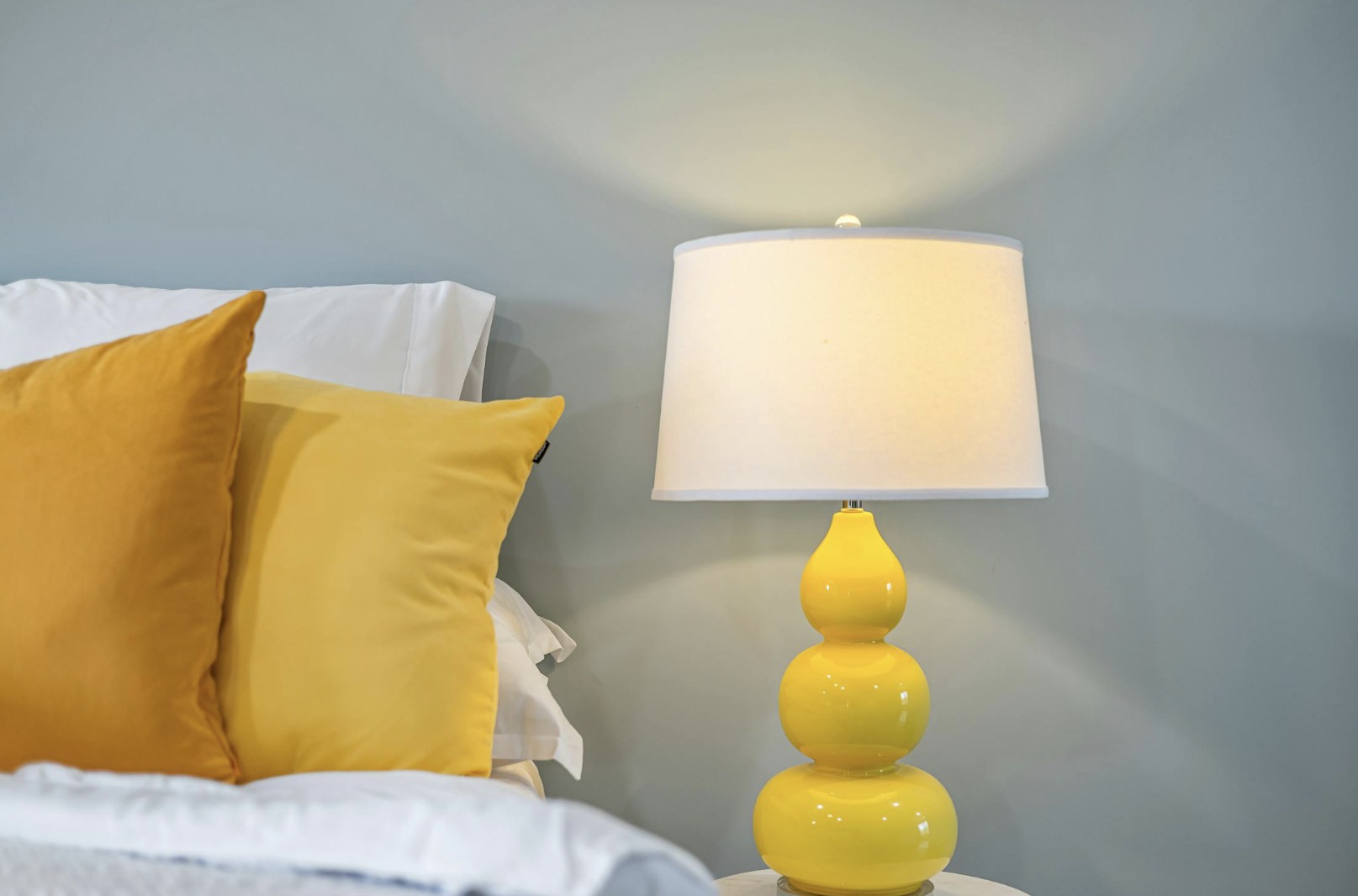
How Tall Should Bedside Lamps Be? A Practical Guide to Perfect Proportions
A bedroom's ambience is considerably impacted by lighting, so effective use of an appropriate light level will provide a comfortable setting and allow for better sleep quality. Bedside lamps are especially significant in setting up your bedroom's lighting scheme because they are placed at a comfortable distance from you, providing both useful task lighting and creating a relaxing environment as you begin to wind down for the night.
A question that interior designers get asked frequently by homeowners is: "How tall should my bedside lamps be?" An accurate answer cannot be defined with one specific height; there are several considerations, such as: proportion of the lamp to the bedside, lamp to bed, distance of the light source from your eye level and how the lamp will ultimately function.
This article will describe how to figure out the correct height for your bedside lamps by discussing the principles of ergonomics, height and proportion as they relate to lamp designs, and will provide you with simple tips to implement in your home.
How Height Impacts Comfort
Many people think more about how a particular light fixture might look as opposed to considering its function and height when determining the best lighting option for their bedroom. While how a light fixture looks will always be important, how a light fixture is proportioned (i.e., how tall it is) greatly influences comfort and usability when using that fixture.
If a bedside lamp is too short, then the lamp's light bulb may fall below your reading horizon, creating unbalanced shadows and insufficient light to read comfortably. If the lamp is too tall, then the lamp's light bulb may be above your eye line, resulting in a blinding glare and difficulty seeing your book clearly due to excessive visual strain. Both scenarios are not considered balanced.
Determining how tall your bedside lamps should be starts with having an understanding of basic ergonomics as they apply to humans. The primary goal is that the lamp's light source will serve your line of sight without shining directly into your eyes.
An ideal relationship exists between your bed, nightstand, and lamp
When you sit up straight in bed, the bottom of the lampshade aligns with your eye level.
This is how this will help you create this ideal relationship:
It prevents the direct glare of the bulb.
It allows the light to fall naturally down onto your book or device.
It will create a well-balanced look within the room.
To establish whether or not you have created this ideal relationship, you will need to be able to measure the height of your mattress, which is typically between 20” and 25”. After you have established this, you will measure the height of your nightstand (which is usually between 24” and 28”).
In an average set-up, the resulting height from the base of the lamp to the top of the lampshade will fall between 24” and 30”; however, there is no hard and fast number, as it is more about the alignment than measurement.
For example, if your bed is lower to the ground, you may require shorter lamps; likewise, if you have a higher mattress or use thick mattress toppers, you would need taller lamps.
Another aspect to consider when selecting lamps is their relationship, proportionally, to the nightstand. A lamp that is too large can overpower the nightstand and create an imbalance because of its size compared to the nightstand. Similarly, a small lamp will appear lost if placed on a wide nightstand.
To create a visually pleasing design, the base of your table lamp should fit proportionally on the nightstand, so it does not exceed the width of the nightstand below. The shade of the lamp will not hang beyond the sides of the tabletop at all. You will need to have enough usable space on the nightstand for all of your essentials.
By following these visual guidelines, you will get an answer to your question of "How do I know the correct height bedside lamps should be?", while considering width & scale.
The lampshade is one of the most overlooked aspects of designing a laminate. Lamplight alone does not determine the amount of light that is emitted from the light bulb inside the lamp, but the lampshade does play a large role in diffusing that light.
When sitting in the chair next to the bed, the bottom edge of the lampshade should be positioned at or below the person's line of sight. This placement helps to block out the light bulb while providing diffused lamp lighting within the person's immediate range.
If the lamp is placed too high, it may be an uncomfortable light. If the lamp is placed too low, it may restrict the amount of usable light that you need.
The lampshade should coordinate with the height of the base of your lamp to prevent an uncomfortable glare, rather than an overwhelming amount of glare.
Adjustment Situations: Where Are You Going To Make Changes?
Not every bedroom is made with standard measurements. There are many times when you may want to change your pendant lighting based on some extenuating circumstances.
Platform Beds
Platform beds are often much lower to the ground, so the lamp may feel too tall for the proportions of the room. Shorter table lamps can help to provide the necessary light without disrupting the visual balance of the room.
Tall Headboards
Many beds have tall headboards. Long, tall headboards will require that you select a table lamp that is slightly taller to create a stronger presence visually and establish balance with all of the vertical lines throughout your bedroom.
Shared Sleeping Spaces
To create balance in a shared sleeping area, try to keep the lamps on either end of the bed at the same height or as close to the same height as possible. This does not mean that the nightstands have to be the same, but they should be close enough that the lamps look nice together.
Wall-Mounted Light Fixtures
If your table top space for the lamps is minimal, consider using a wall-mounted fixture instead. If this option is used, it is also important to keep the same eye-level placement in mind. You do not want the light from the wall-mounted fixture to be shining directly into your eyes while seated.
Bedside Lamp Light Quality and Comfort
When determining how high to place the lamps, think about the quality of light produced by each lamp in addition to the functional aspect of lamp height. Bedside lamps should produce warm light (2700K to 3000K) to create a calming atmosphere conducive to restful sleep. Extremely bright or cool temperature lamps can hinder even the most effective 'winding down' routine. Therefore, it is not just how high the lamp is placed but also how high the lamp is placed relative to the amount of light produced by the bulb that matters.
Light bulbs produce varying wattage levels; therefore, even if you have selected the appropriate height for the lamp based on the amount of illumination needed, if you select an excessively bright bulb (compared to your intended use), you may be uncomfortable using the lamp. Aim for low-light or diffused illumination that will allow you to accomplish any evening activity without being overwhelmed by the amount of light.
Approximate Bedside Lamp Measurement Process
For a quick formula to estimate the height of your lamp, use the following process.
Sit up straight in your bed and measure the distance from the top of your mattress to your eyes. To this distance, add the height of your bedside table. This sum will give you a reasonable estimate of how tall your lamp's body and shade together will be.
This process allows you to eliminate guesswork when determining how high to place your lamp in your bedroom.
Common Blunders to Avoid
When choosing a lamp for your bedside nightstand, you may find yourself making some of these common blunders:
- Focusing primarily on the lamp's appearance rather than how it will work with the other furnishings in the room;
- Not considering how the height of the mattress can change after you purchase a new one;
- Not considering that if you have thick bedding, your seated eye level may be higher;
- Choosing lamps that are too large for the table or the room.
Taking measurements before making your purchase will help ensure that the lamp will feel intentional instead of as though it just happened—an unplanned or accidental placement.
Final Thoughts: Balancing Comfort and Design
In closing, the question, "What is the correct height for lamps on a bedroom nightstand?" is a matter of aligning yourself both visually and functionally with the lamp. When the proportions of lamps on your nightstands are balanced, they will provide comfort for reading and create a welcoming, peaceful environment in your bedroom.
There is no one-size-fits-all answer to determining how tall a lamp should be on a nightstand. Rather, think about the overall balance of the lamps with your seating height, the height of your nightstands, and your eye level when a lamp is placed on it so it blends effortlessly with the other furnishings in the room, without looking like it is trying to call attention to itself or getting lost in the mix of other pieces that belong in the room.
By making a conscious decision to consider the height of your nightstand lamps, you will turn your bedside lamp from an afterthought into a purposeful design choice that will be a subtle enhancement to your daily routine.